Choice Science: H2OH My Goodness
WHAT IS IT ABOUT THE STUFF THAT THINGS ARE MADE OF THAT IMPACTS THE SPEED THAT THE ICE MELTS?!?
What happens when we put ice on a bunch of different surfaces? Will it melt faster on one vs. another? What can we brainstorm that will make ice melt really fast? What do we think will make ice melt really slow?!?!
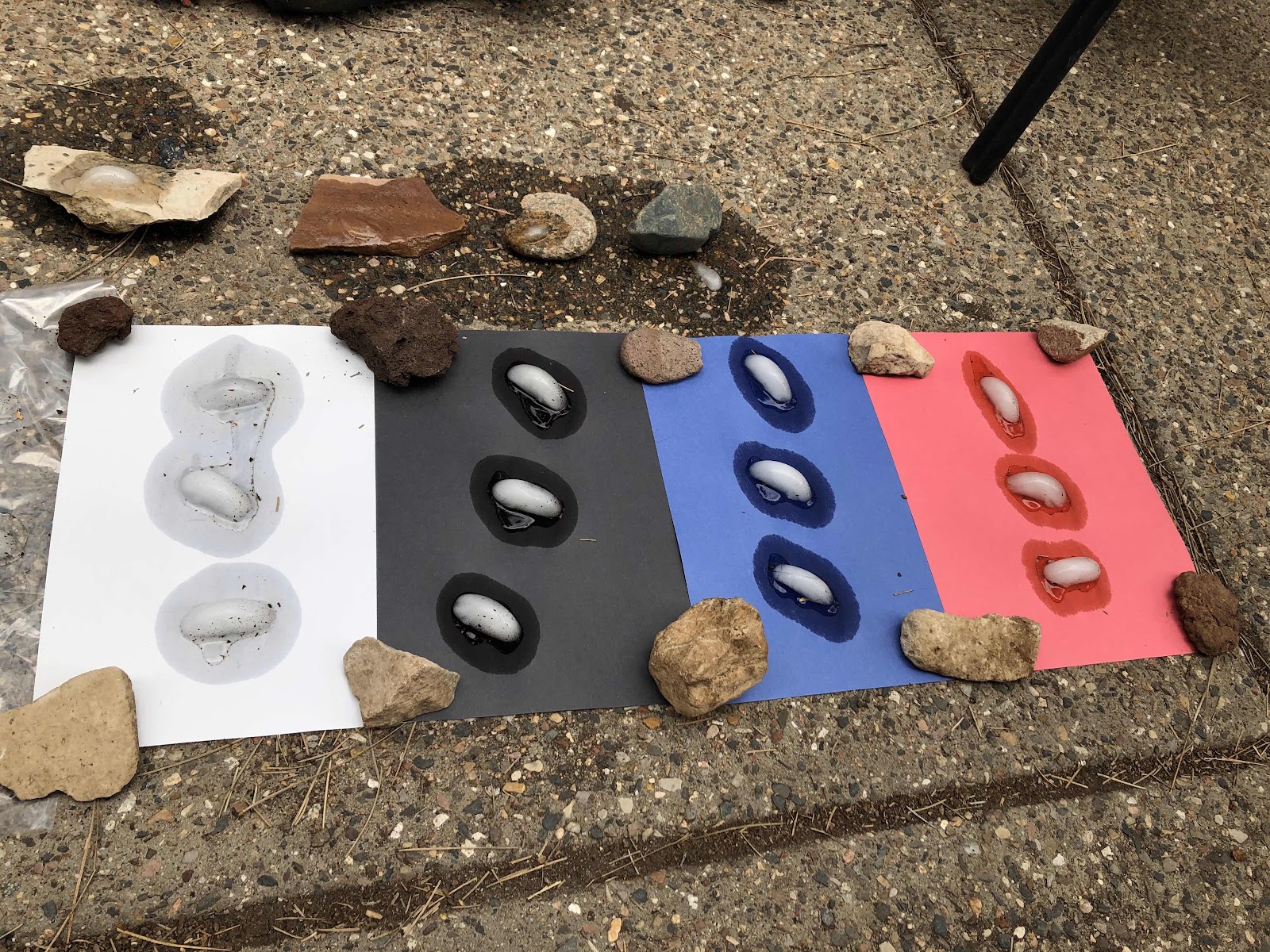
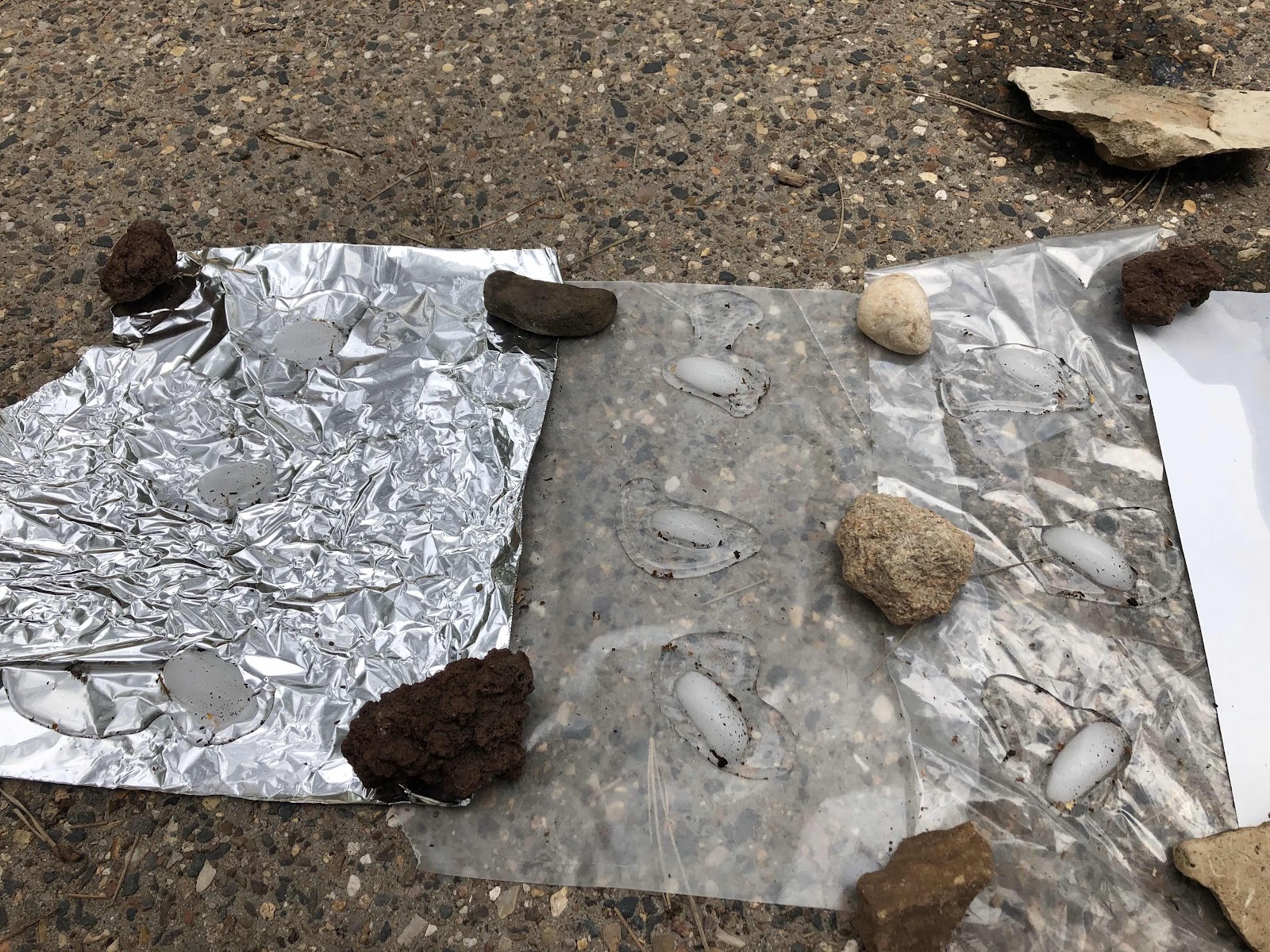
- Pick different surfaces, materials, or places? What did you choose? We chose aluminum foil, white paper, black paper, red paper, blue paper, wax paper, plastic, and rocks of different colors from outside.
- Make a prediction. How will the ice melt in each case compared to one another? The ice will melt faster on the rocks and black paper and the metal and the plastic will be the slowest.
- What did you observe?
- Conditions
- Temperature 73F degrees
- Weather cloudy
- Wind speed 13 mph
- 20% humidity
- Melting times on rocks
- black rock - ice fell off rock before melting completed
- Multicolored rock- 18 minutes
- White rock- 25 minutes.
- Red rock-19 minutes
- Melting times on papers. The papers absorbed the water.
- Red paper- 40-44 minutes.
- White paper- 30-37 minutes.
- Blue paper- 38-39 minutes.
- Black paper- 43-44 minutes.
- Melting times on other materials. As the ice melted it pooled around the ice because those materials do not absorb water.
- Wax Paper- 42-47
- Plastic- 43-45.
- Aluminum foil- 42 minutes.
- On which material did the ice melt the fastest? On what material did the ice melt the slowest? Why do you think that was the case?
- Ice melted the fastest on the rocks. Rocks were outside so they were already warm and made melting faster.
- The ice on the white paper melted fastest of the papers and other materials. Ice on the wax paper and plastic melted the slowest. Some surfaces absorbed or reflected sunlight. The darker the paper that we used the more heat was absorbed but the more light and heat gets reflected from the lighter surfaces. The papers absorbed water away from the ice and the other materials pooled water around the ice. I learned that water is an insulator and can keep heat from melting the ice more. Ice melting on surfaces is a combination of heat absorption and reflection as well as the presence of melted water around the ice. The rocks and white paper reflected light to melt the ice and kept the water from pooling around the ice as it melted making faster melting.
- We did this outside in the shade. The melting may be different in direct sunlight where sun and heat will be absorbed by the surfaces.
- What kinds of investigations would you like to try next and why? I want to try this again because I want to see if ice melts faster with different items such as sand or cloth. I want to try this also using the same materials but in direct sunlight. I predict that the black paper and aluminum foil would help the ice melt fastest in direct sunlight.


This is a fun and much faster way to melt ice!
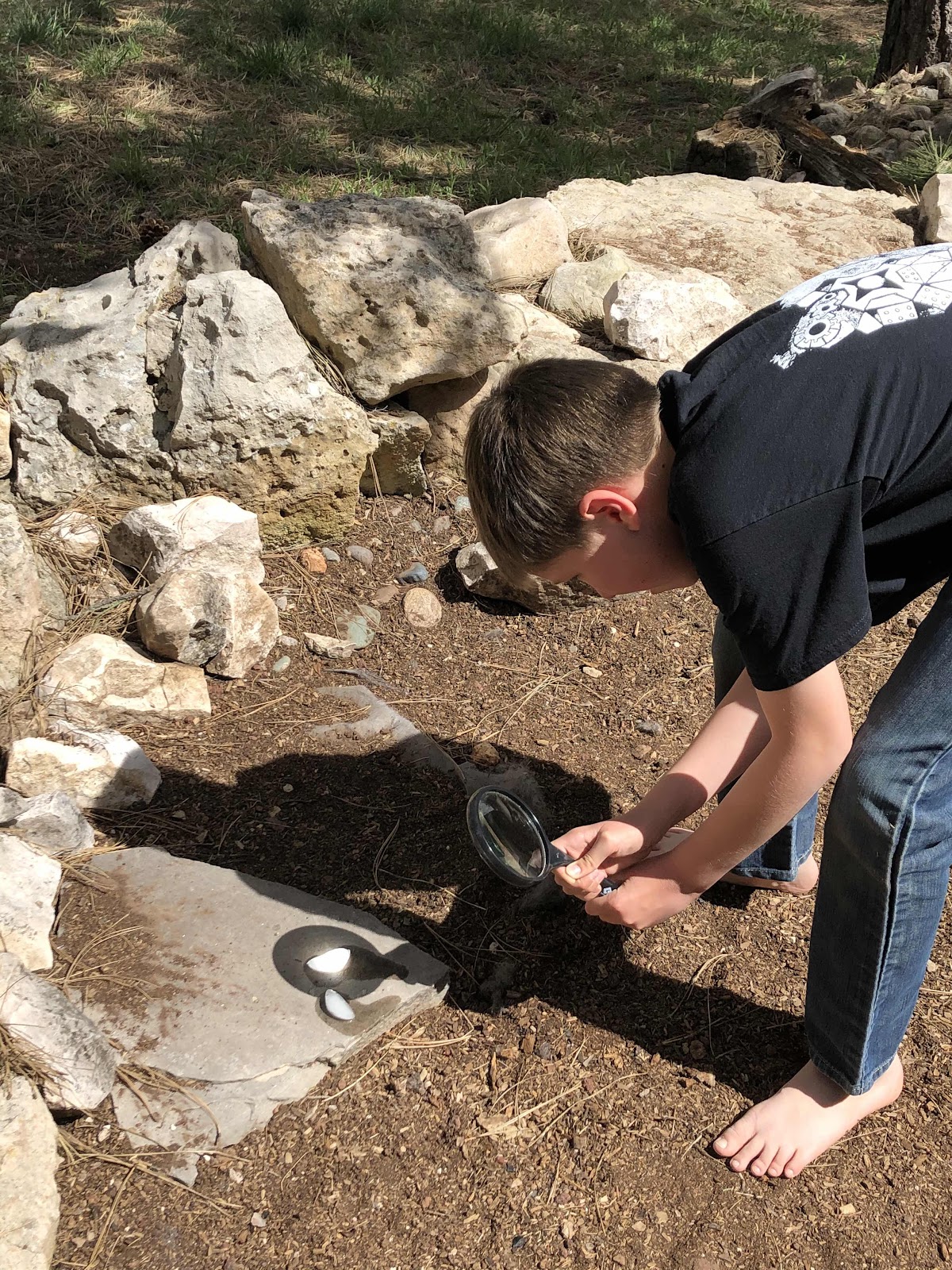

Fascinating experiment!
ReplyDelete